Quick Vegetarian Kimchi Tofu Soup (Kimchi-jjigae)
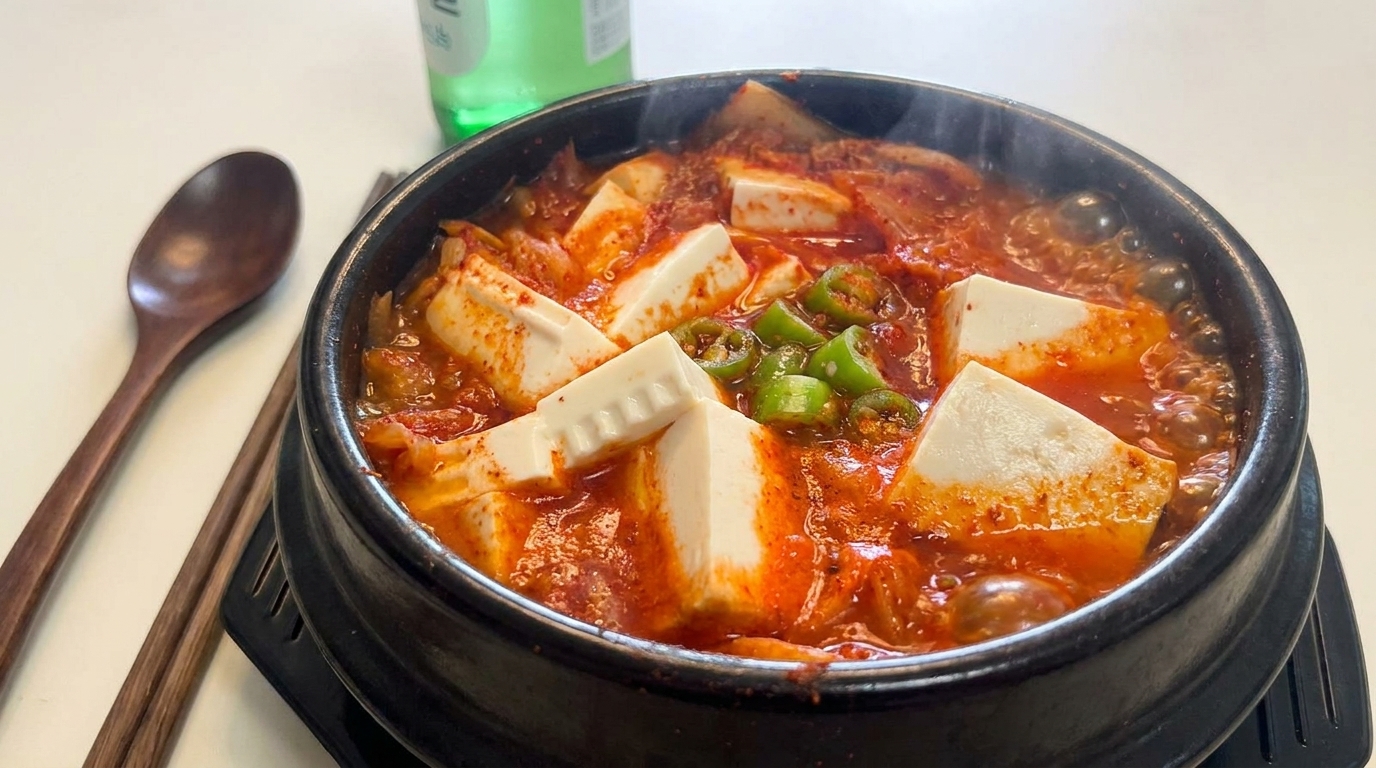
A vibrant, spicy, and deeply comforting Korean-style stew featuring silken tofu, savory shiitake mushrooms, and tangy kimchi in a rich umami broth.
This vegetarian-friendly take on Kimchi-jjigae is the ultimate solution for a quick, soul-warming meal. By sautéing the kimchi and aromatics first, we develop a complex depth of flavor that usually takes hours to achieve, making it perfect for a healthy weeknight dinner.
Ingredients
- 0.5 bowl spicy kimchi, chopped
- 1 block soft or silken tofu, cubed
- 1 small red onion, sliced
- 3–4 shiitake mushrooms, sliced
- 100 g cabbage, chopped
- 1 handful bean sprouts
- 2–3 pieces kelp
- 1 handful fresh lettuce or greens
- 2 tbsp fine chili flakes (Gochugaru)
- 1 tbsp light soy sauce
- 1 tsp beef powder or vegetable bouillon
- 1 pinch sugar
- to taste salt and MSG
Instructions
- 1Sauté the base aromatics
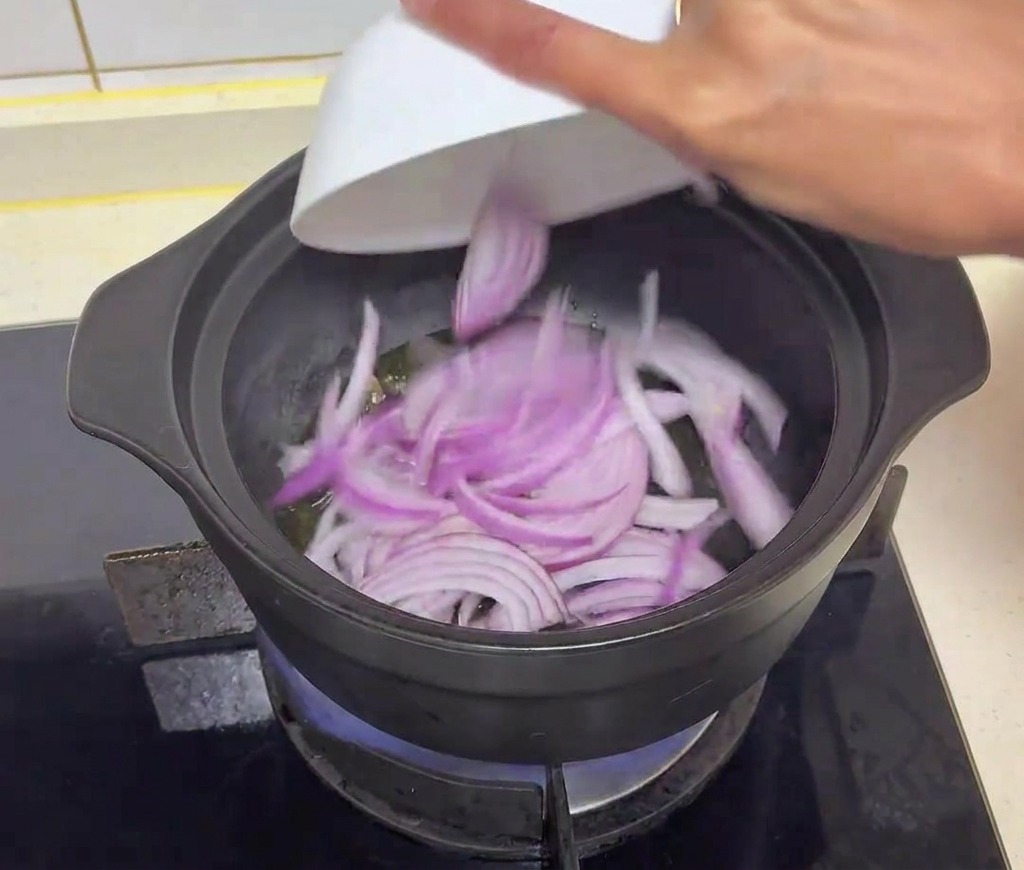
Heat a small amount of oil in a pot over medium heat. Add the sliced red onions and shiitake mushrooms, sautéing until the onions are translucent and the mushrooms are fragrant. This creates a savory foundation for the broth.
Tip: Make sure the pot is hot before adding the onions to get a good sizzle and release the flavors more effectively. - 2Add the cabbage
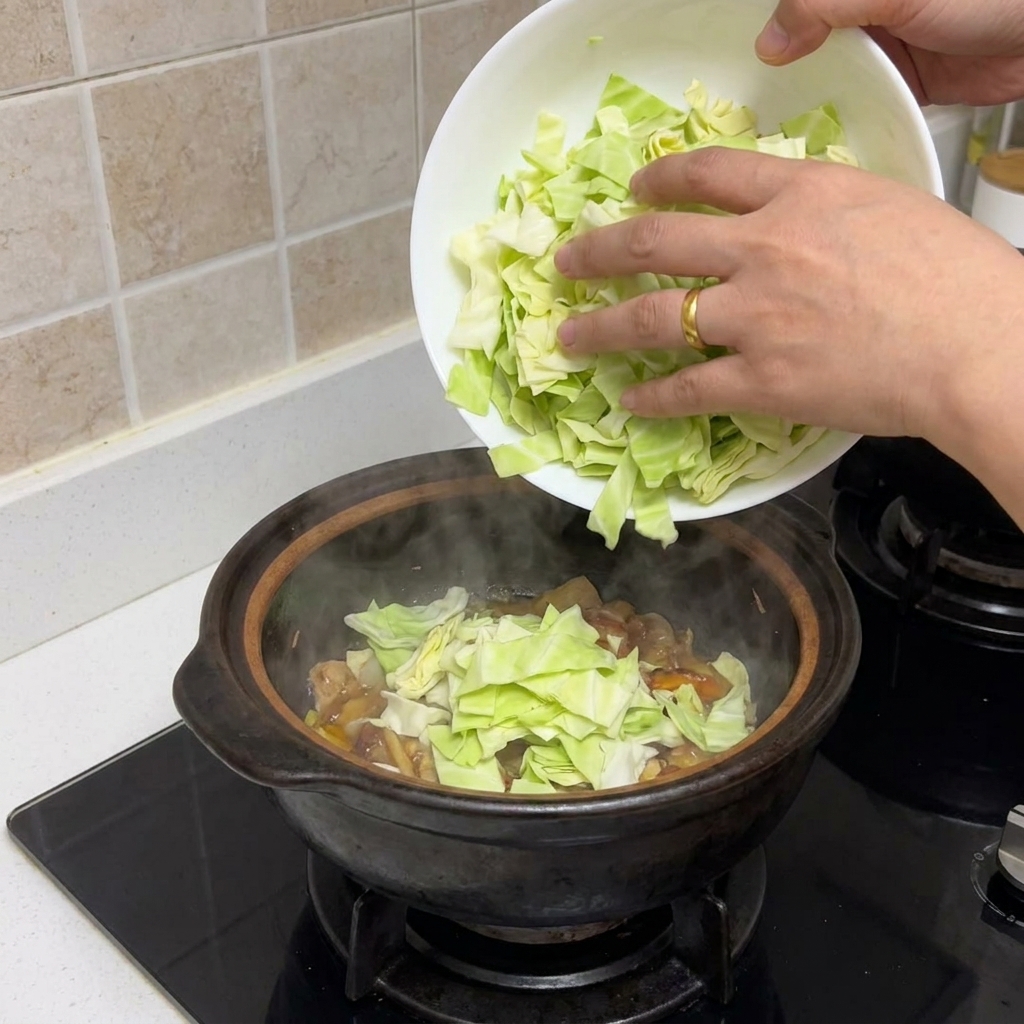
Once the onions and mushrooms are fragrant, toss in the chopped raw cabbage. Stir-fry the cabbage briefly to soften it, which will enhance the overall flavor of the soup.
Tip: Pre-cooking the cabbage slightly helps draw out its natural sweetness before adding liquids. - 3Mix in the bean sprouts
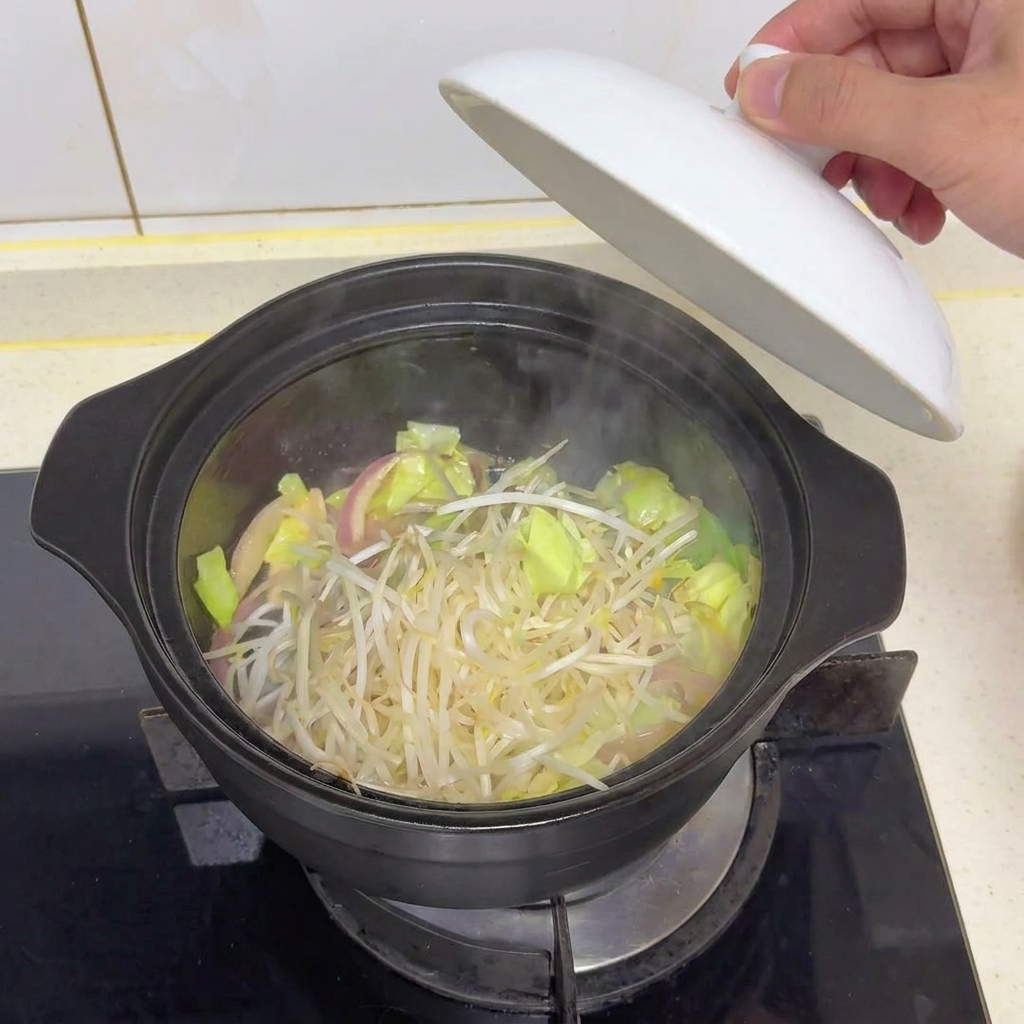
Add a handful of fresh bean sprouts into the pot alongside the cabbage. Continue to stir-fry the vegetable mixture until all the greens have slightly softened.
Tip: Bean sprouts cook very quickly, so just a brief mix with the other vegetables is enough at this stage. - 4Incorporate the kimchi
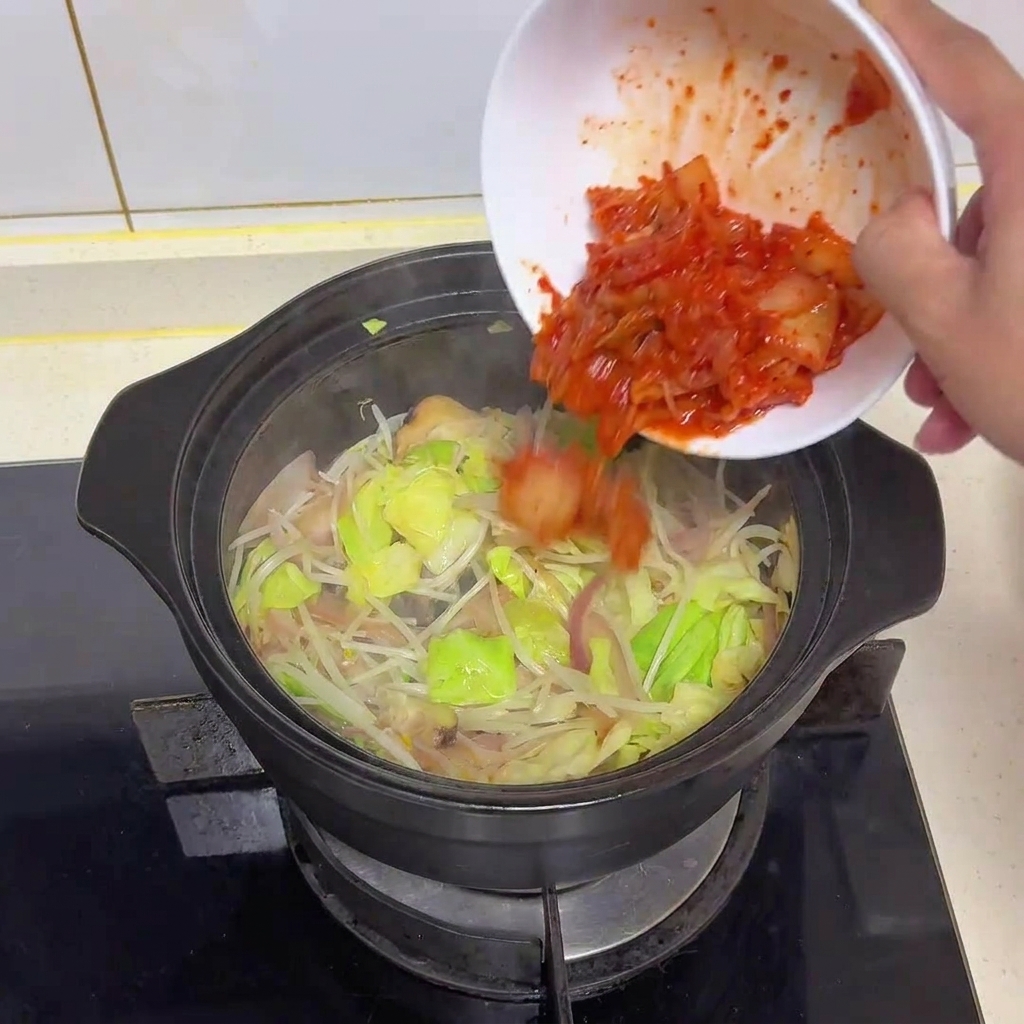
Pour half a bowl of chopped spicy kimchi into the softened vegetable mixture. Stir-fry everything together until the signature tangy and spicy aroma of the kimchi is released.
Tip: Sautéing the kimchi before adding water deeply intensifies its flavor and gives the broth a richer color. - 5Season with salt
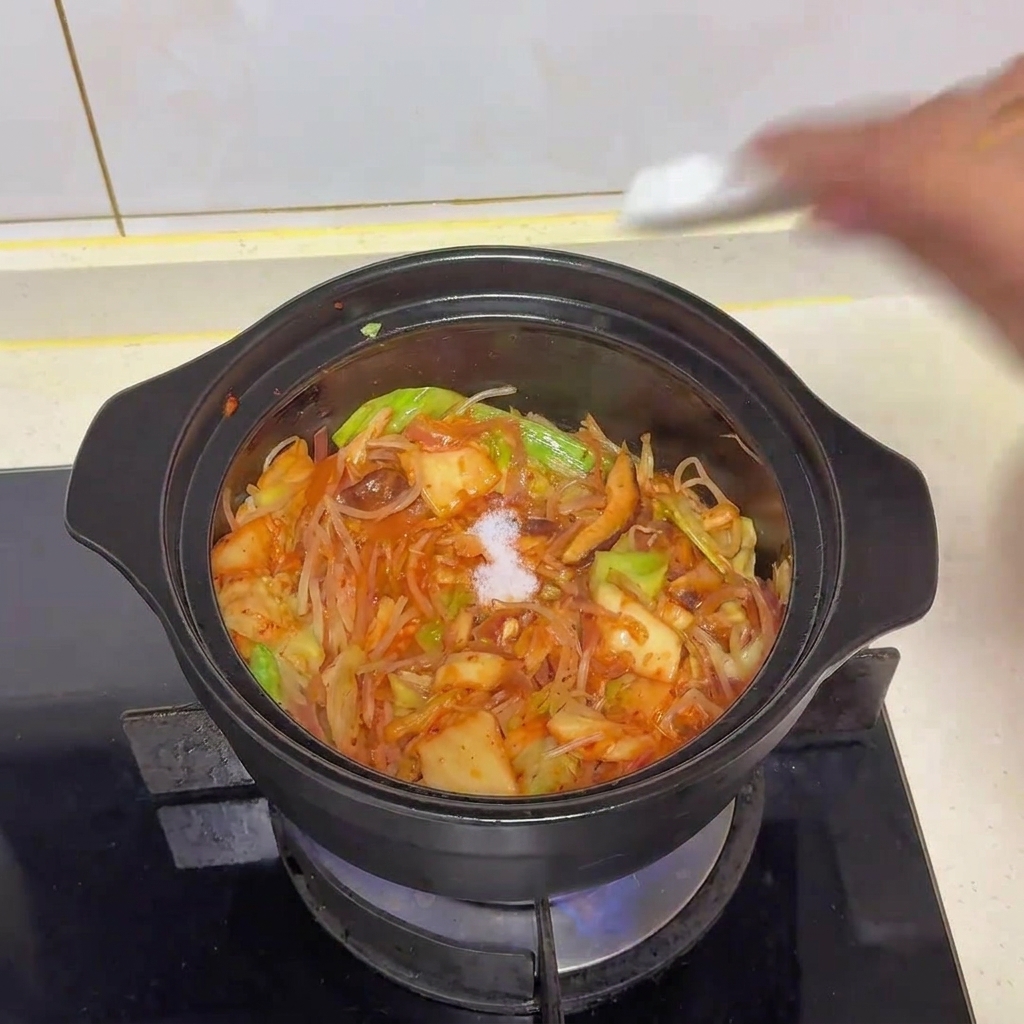
Begin seasoning the soup base by adding salt to the pot. You can adjust the amount of salt to suit your personal taste preferences.
Tip: Keep in mind that the kimchi and soy sauce will also add saltiness, so season carefully at this stage. - 6Add light soy sauce
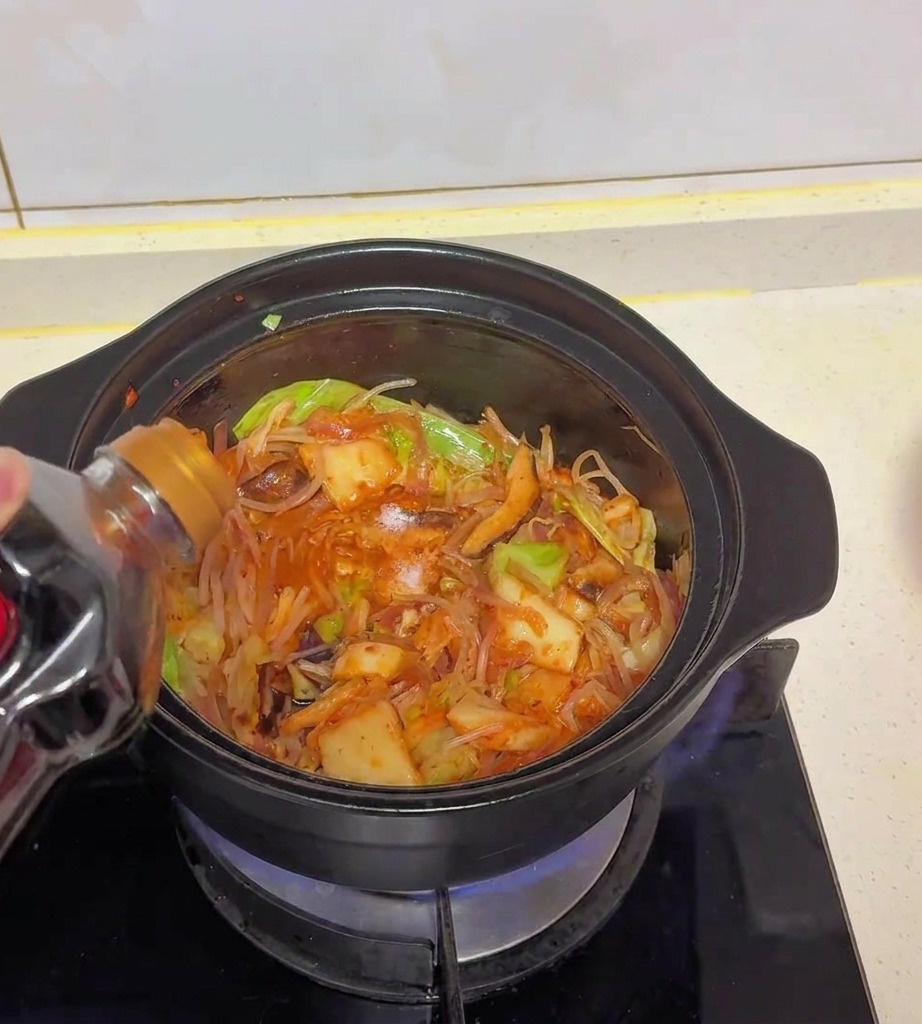
Pour a portion of light soy sauce directly into the vegetable and kimchi mixture. The soy sauce adds essential saltiness and a deep umami flavor that complements the fermented tang of the kimchi.
Tip: Using light soy sauce instead of dark soy sauce helps maintain the vibrant red color of the kimchi soup. - 7Balance with sugar
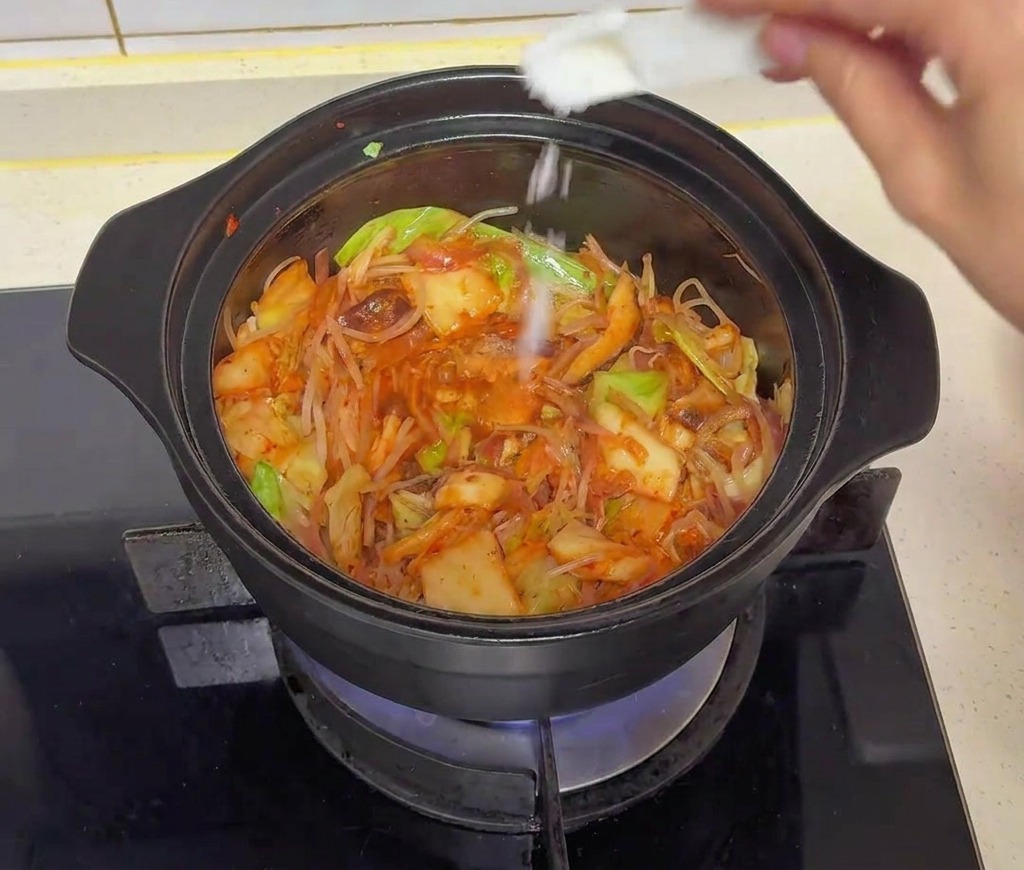
Add a small spoonful of white sugar to the pot. A touch of sweetness is crucial in kimchi-based dishes as it balances out the high acidity and intense spiciness, creating a more harmonious broth.
Tip: You only need a pinch; the goal is to balance the flavors, not to make the soup sweet. - 8Add savory seasoning
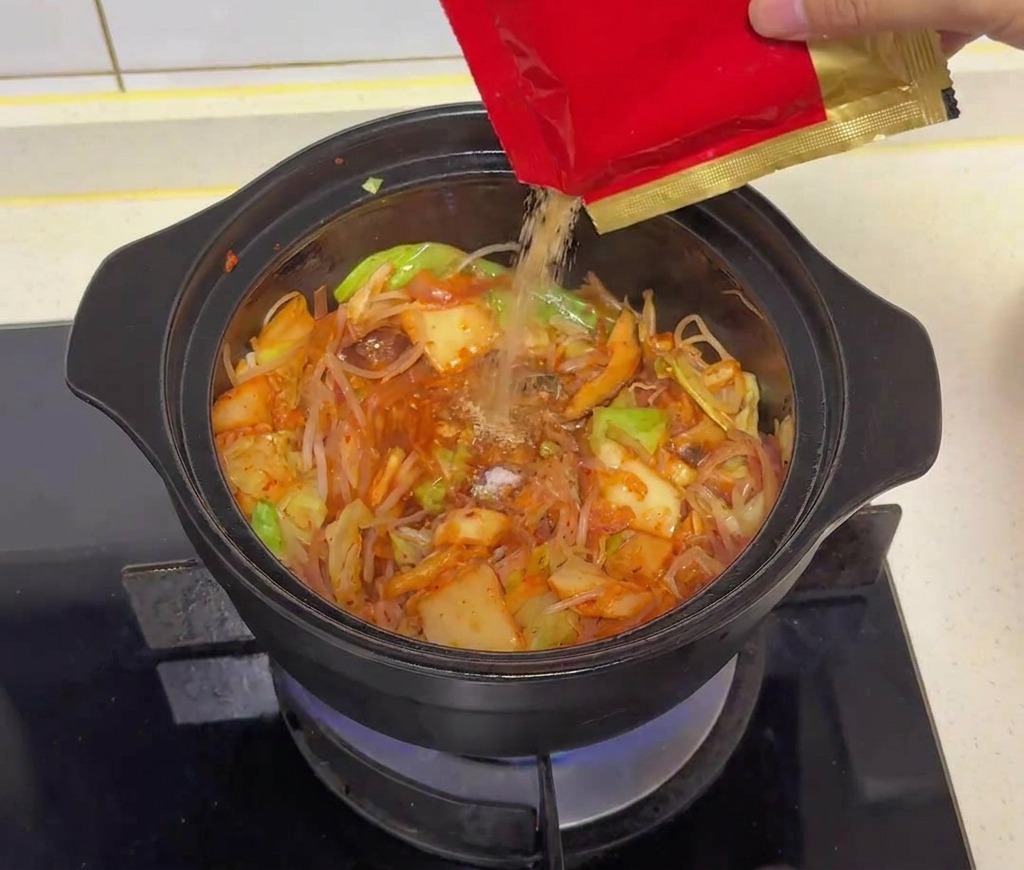
Stir in the beef seasoning powder. This provides an instant burst of savory depth, making the broth taste hearty and well-developed despite the short cooking time.
Tip: For a strictly vegan version, you can substitute this with a mushroom-based seasoning powder or vegetable bouillon. - 9Enhance the umami
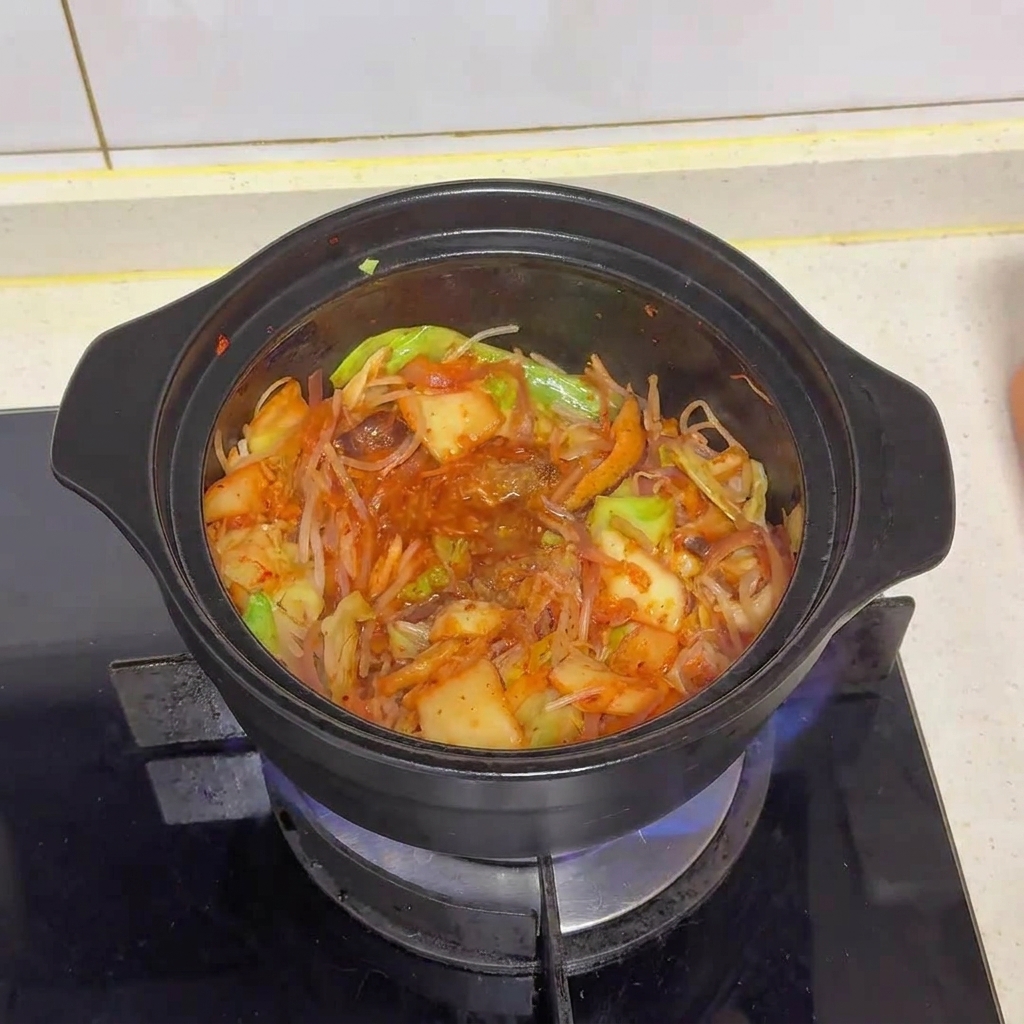
Add a small pinch of MSG to the seasonings. This helps to further enhance the natural savory notes of the mushrooms and kimchi, rounding out the overall taste of the soup.
Tip: MSG is a common ingredient in many professional kitchens to achieve additional depth of flavor but you can omit it if you prefer. - 10Add chili powder for heat
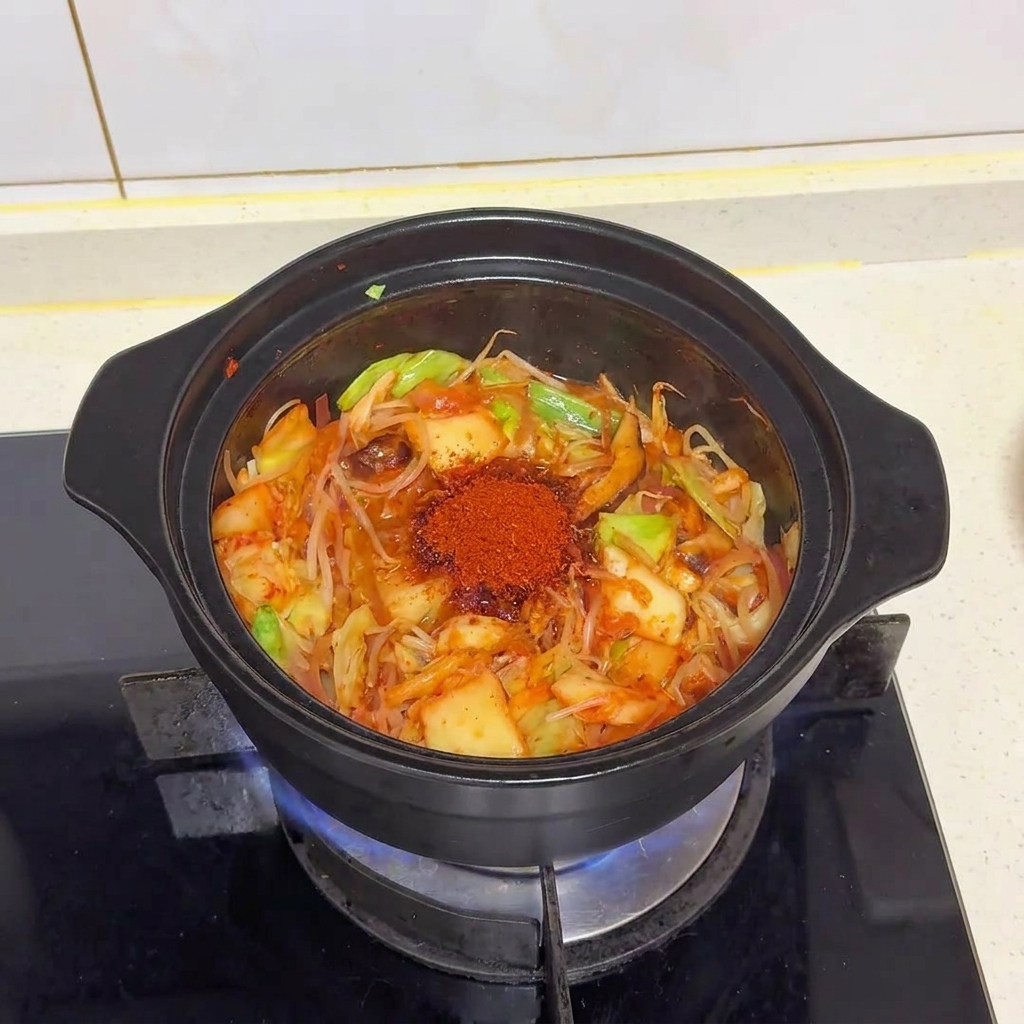
Add two spoonfuls of bright red, fine chili powder (Gochugaru) to the center of the pot. Stir-fry the powder briefly with the vegetables to toast it slightly, which releases its vibrant color and smoky heat into the base.
Tip: Adjust the amount of chili powder based on your spice tolerance; fine powder dissolves more easily into the broth than coarse flakes. - 11Add the hot water
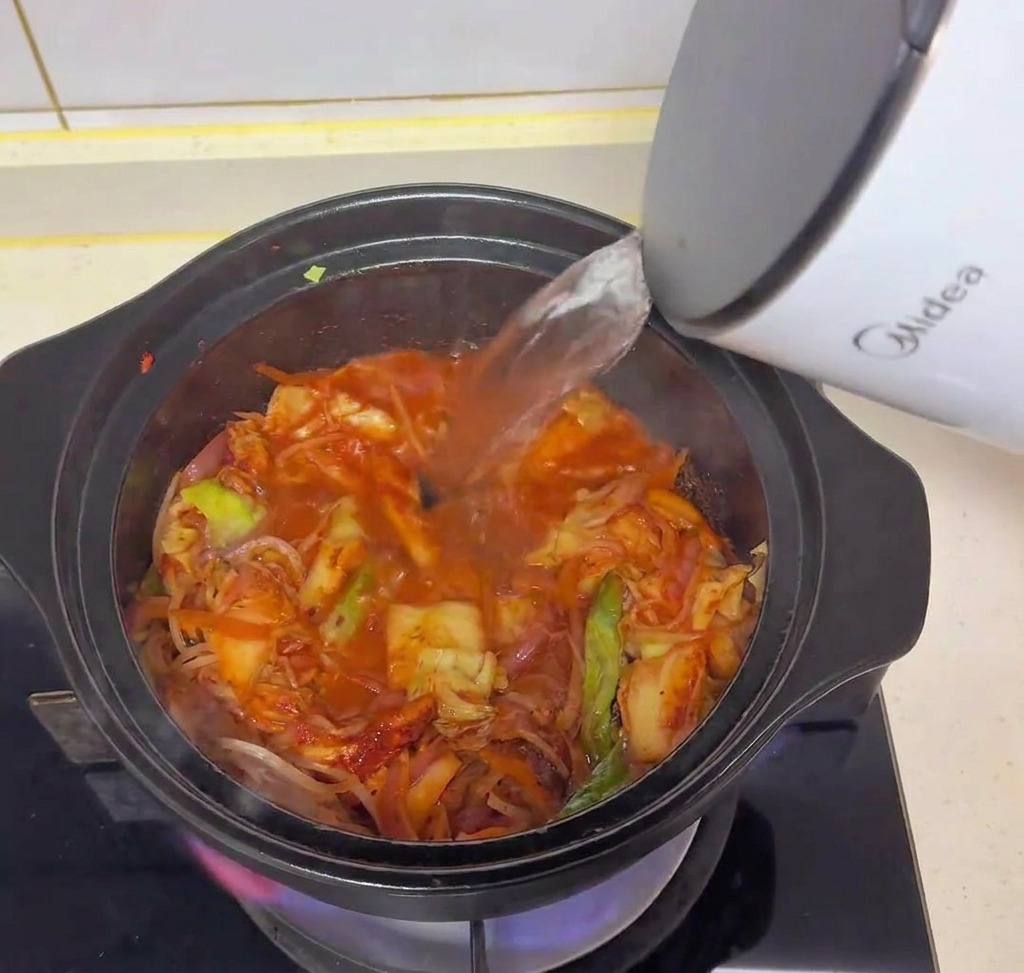
Once the kimchi and seasonings are fragrant, pour hot water into the pot. Using hot water helps maintain the temperature of the sautéed ingredients and speeds up the cooking process to form a flavorful soup base.
Tip: Using pre-boiled water ensures the vegetables do not become soggy from sitting in cold water as it heats up. - 12Add the kelp leaves
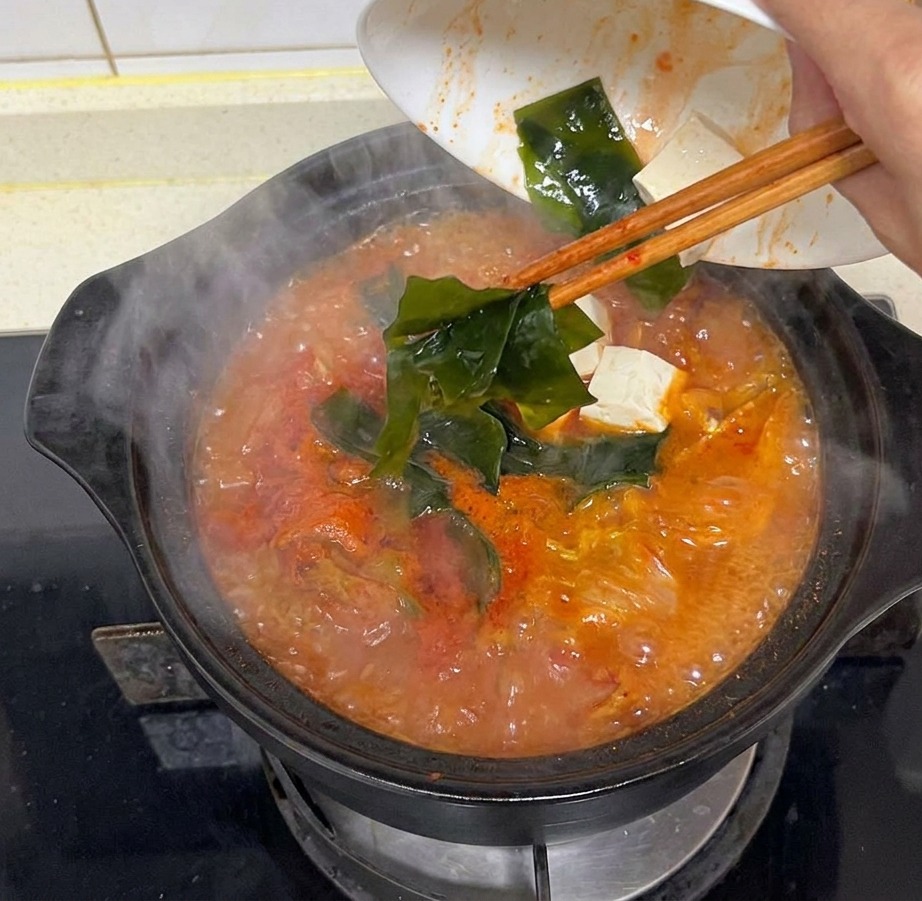
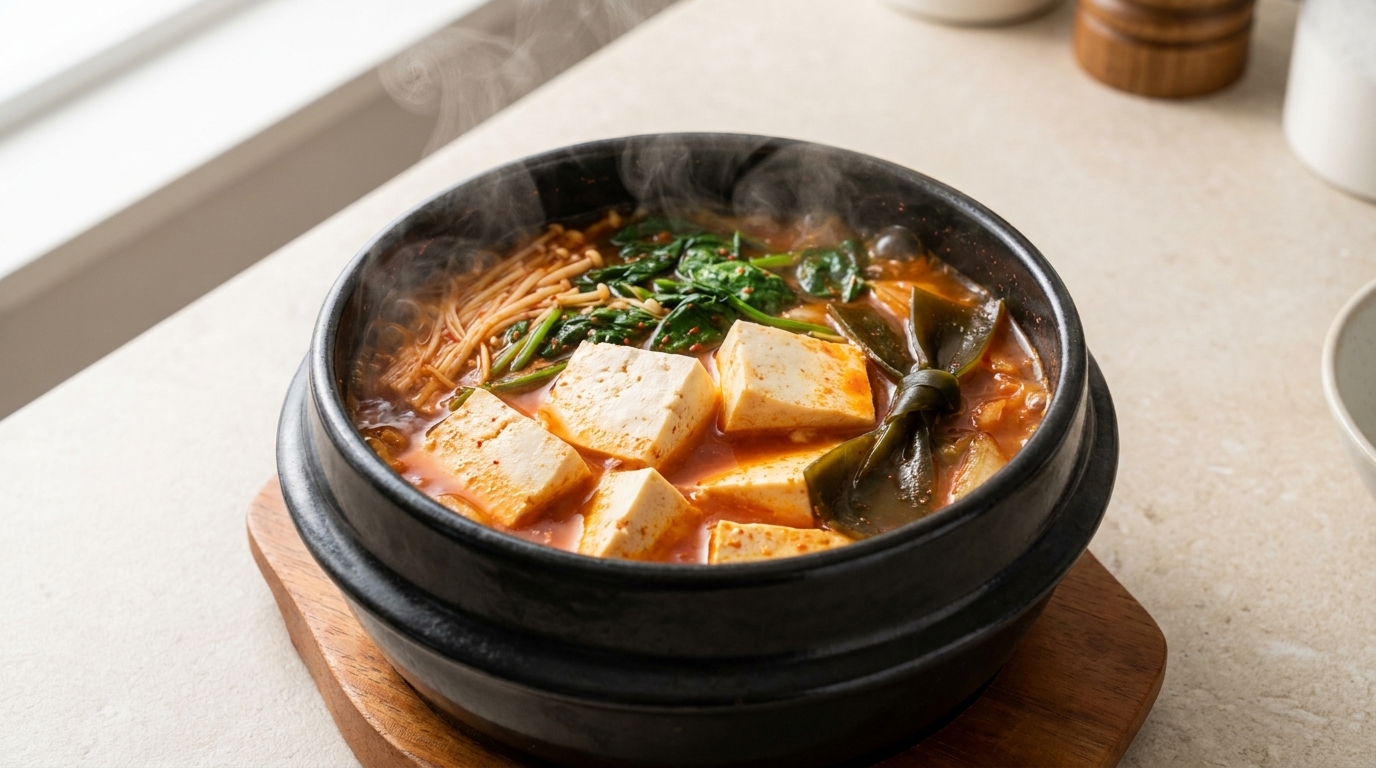
After the soup base has been seasoned and the water is added, incorporate the dark green kelp leaves into the boiling pot. The kelp adds a rich, savory umami depth to the broth, which perfectly complements the spicy and tangy flavors of the kimchi.
Tip: If you are using dried kelp, ensure it is thoroughly soaked and rinsed to remove any salt or grit before adding it to the soup for the best texture. - 13Add the tofu cubes
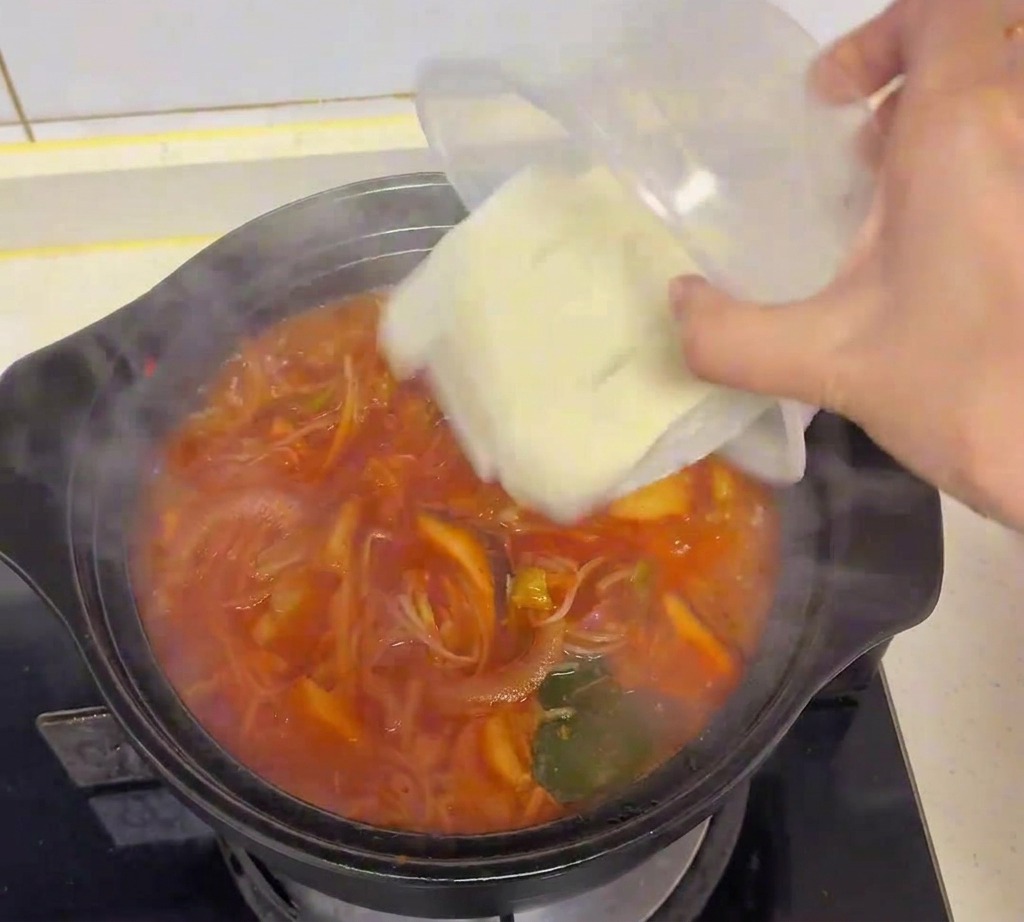
Carefully slide the white tofu cubes into the pot. Using silken tofu provides a soft texture that absorbs the spicy broth perfectly while simmering.
Tip: Soaking tofu in hot salted water for a few minutes before adding it to soup helps it firm up so it does not break as easily. - 14Simmer the soup

Place a lid on the pot and let the soup simmer for about 5 minutes. This allows the flavors of the kimchi, kelp, and seasonings to fully penetrate the tofu and vegetables.
Tip: Simmering with a lid on prevents excessive evaporation and keeps the heat consistent for even cooking. - 15Finish with fresh greens
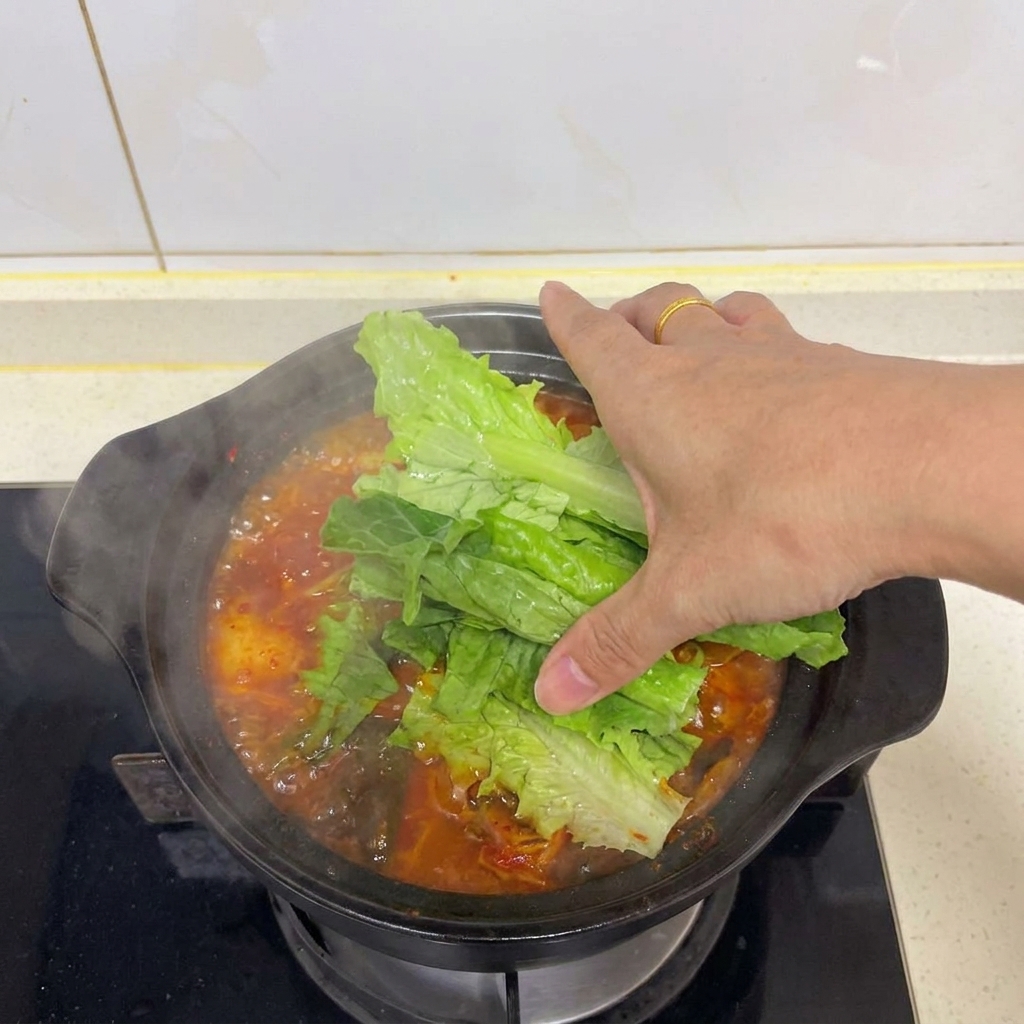
Add a handful of fresh lettuce leaves to the boiling soup as a final touch. Once the leaves have just wilted into the spicy broth, your Kimchi Tofu Soup is ready to serve immediately.
Tip: Add leafy greens right at the end to keep their color bright and prevent them from overcooking.