Pork Belly Kimchi Stew (Kimchi-jjigae)
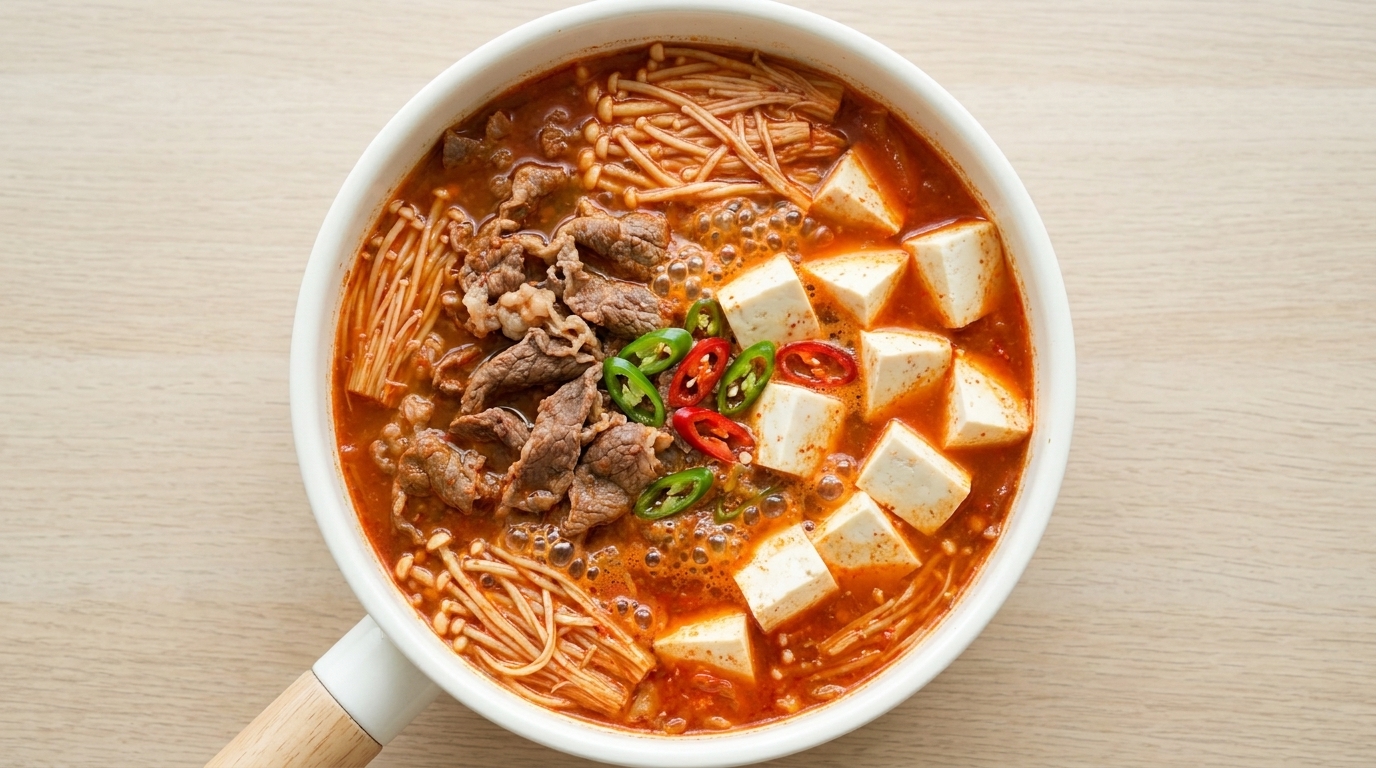
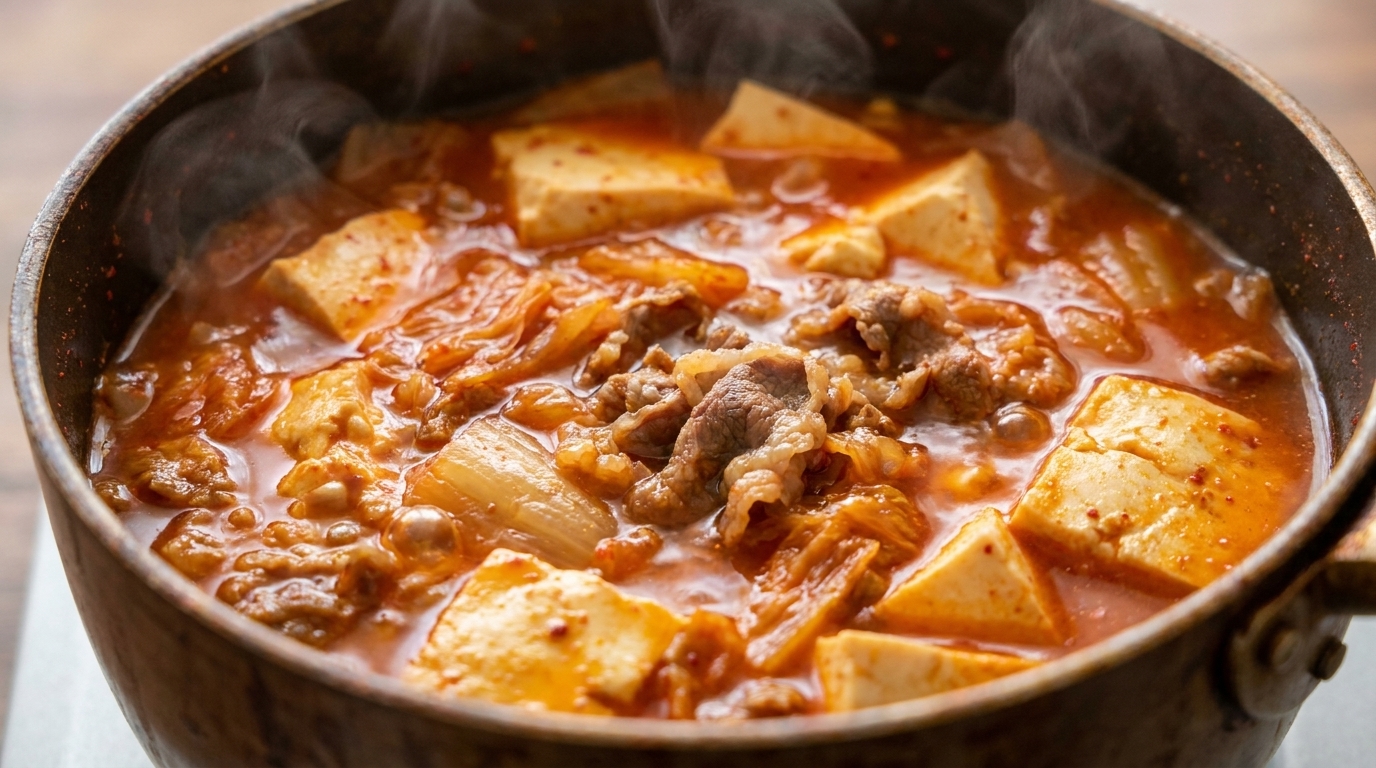
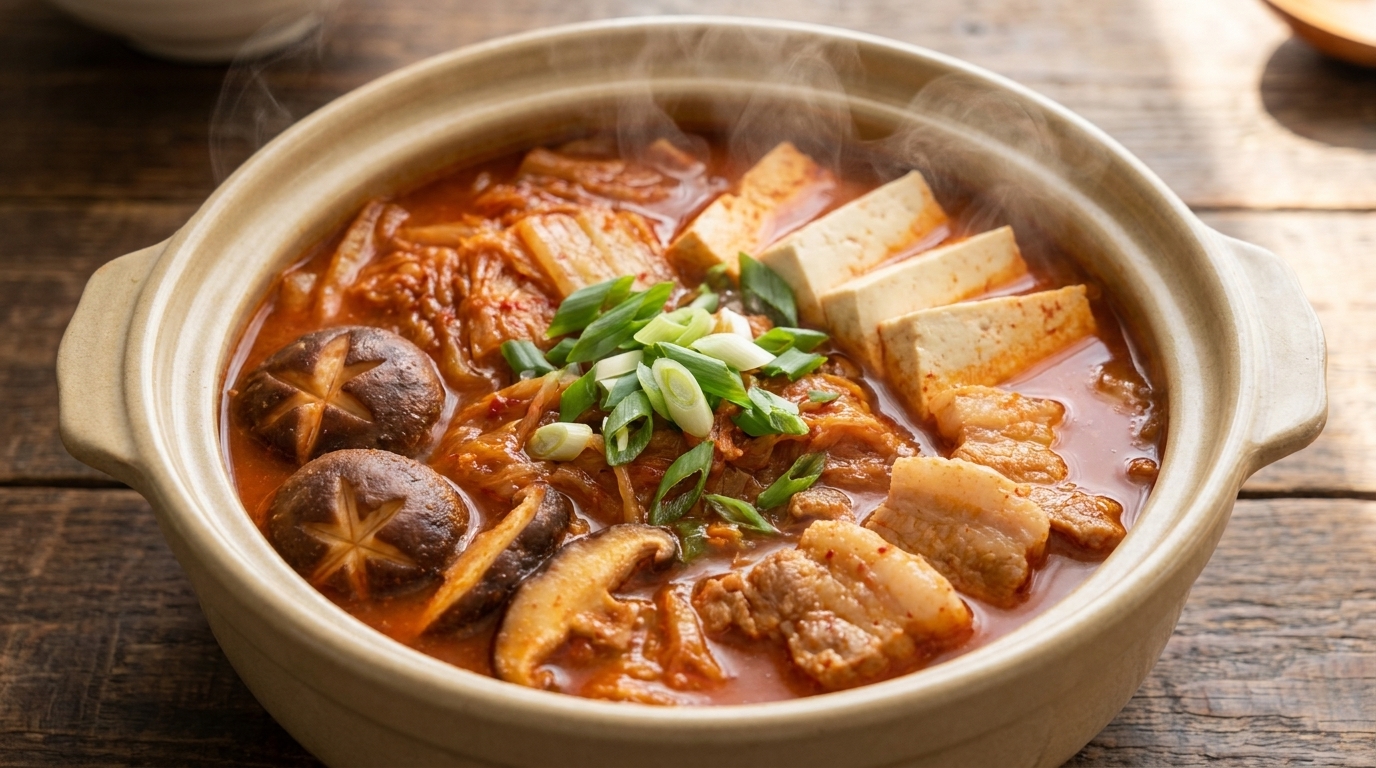
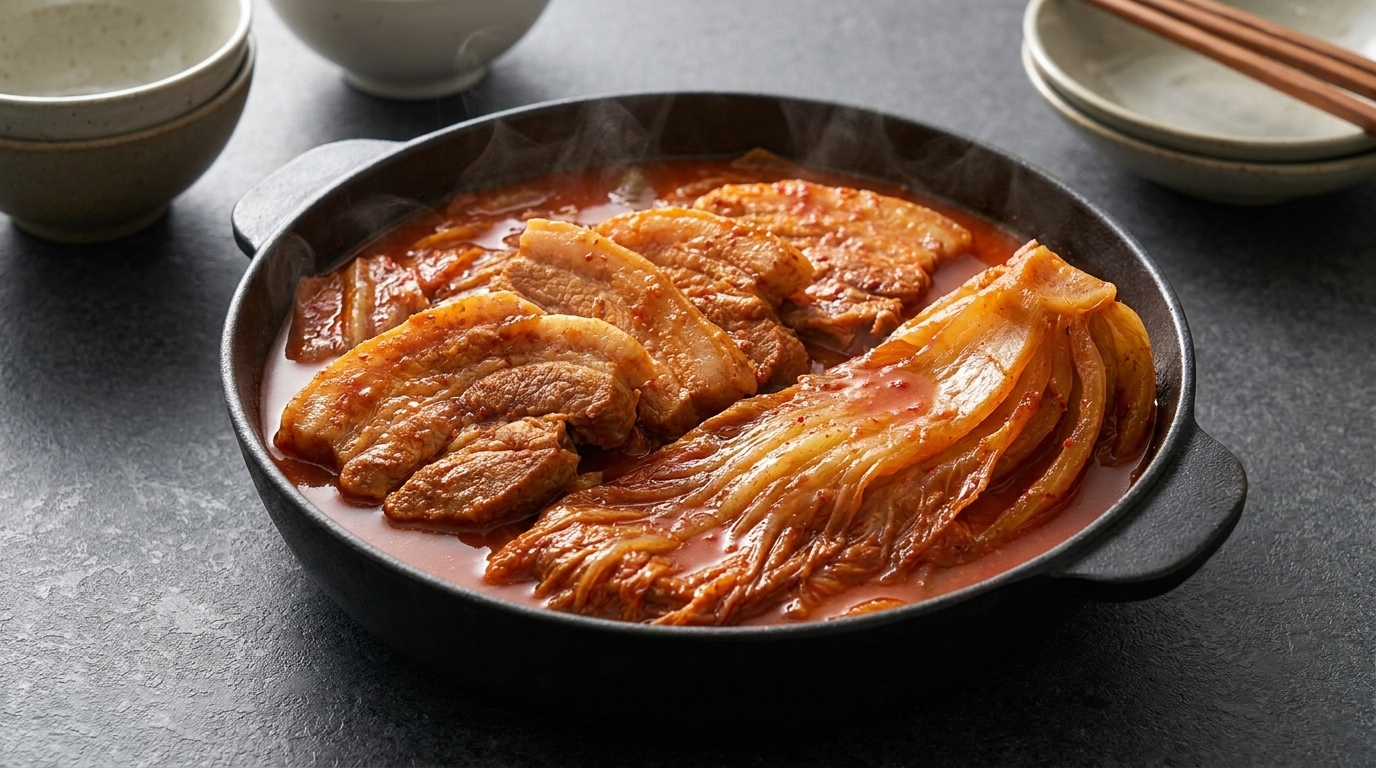
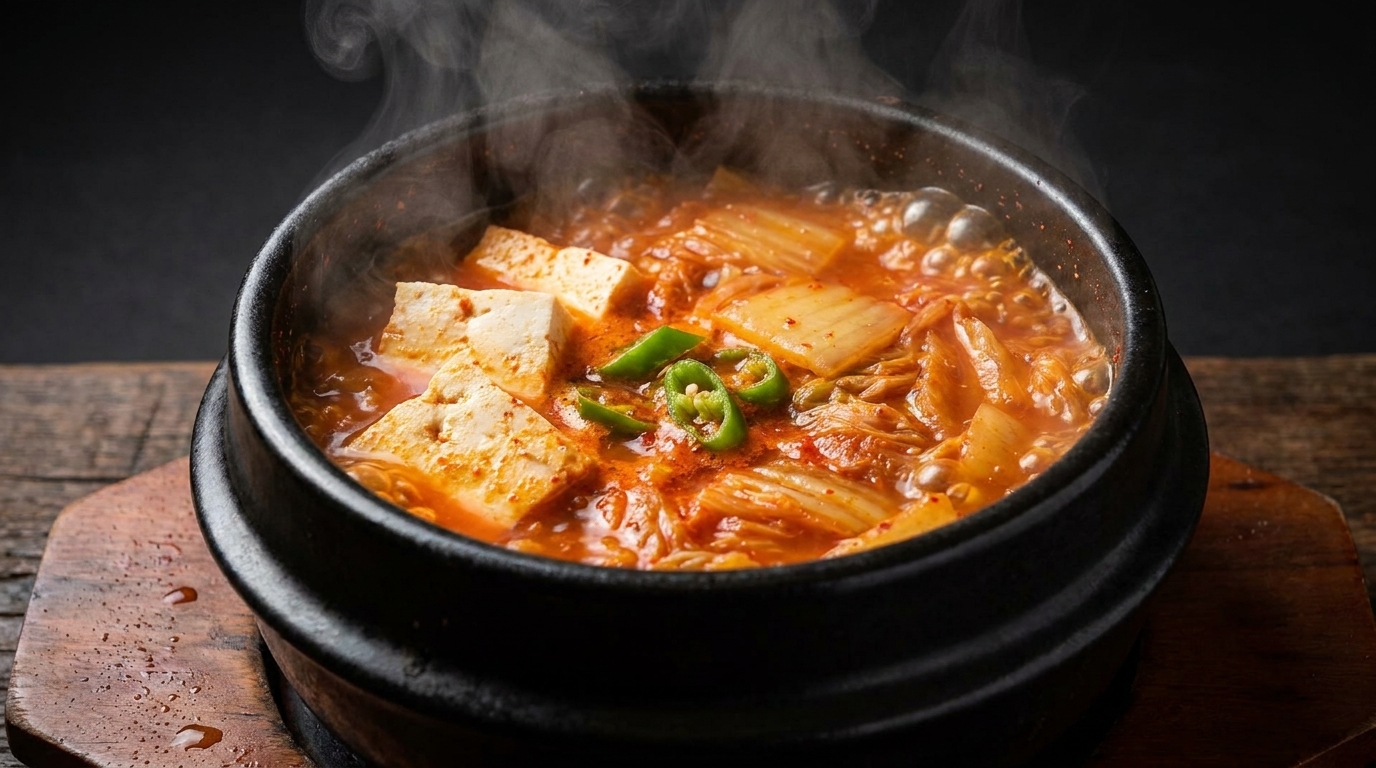
A staple of Korean comfort food, this hearty Kimchi-jjigae features rich pork belly, deeply fermented kimchi, and soft tofu bubbling in a fiery, savory broth.
Kimchi-jjigae is a beloved everyday dish in Korea, perfect for making use of aged, sour kimchi. The rendered fat from the pork belly creates a rich foundation, while the highly fermented kimchi adds a profound depth of flavor that only gets better as it simmers.
Ingredients
- 300 g pork belly
- 12 red onion
- 2 cups sour kimchi (aged kimchi)
- 3 cups water
- 1 tbsp dark soy sauce
- 1 tbsp Korean chili powder (gochugaru)
- 1 tbsp white sugar
- 12 block tofu
- 1 tbsp minced garlic
- 1-2 green chili peppers
- 1 handful fresh bean sprouts
- 1 tbsp beef powder (optional)
Instructions
- 1Fry the pork belly
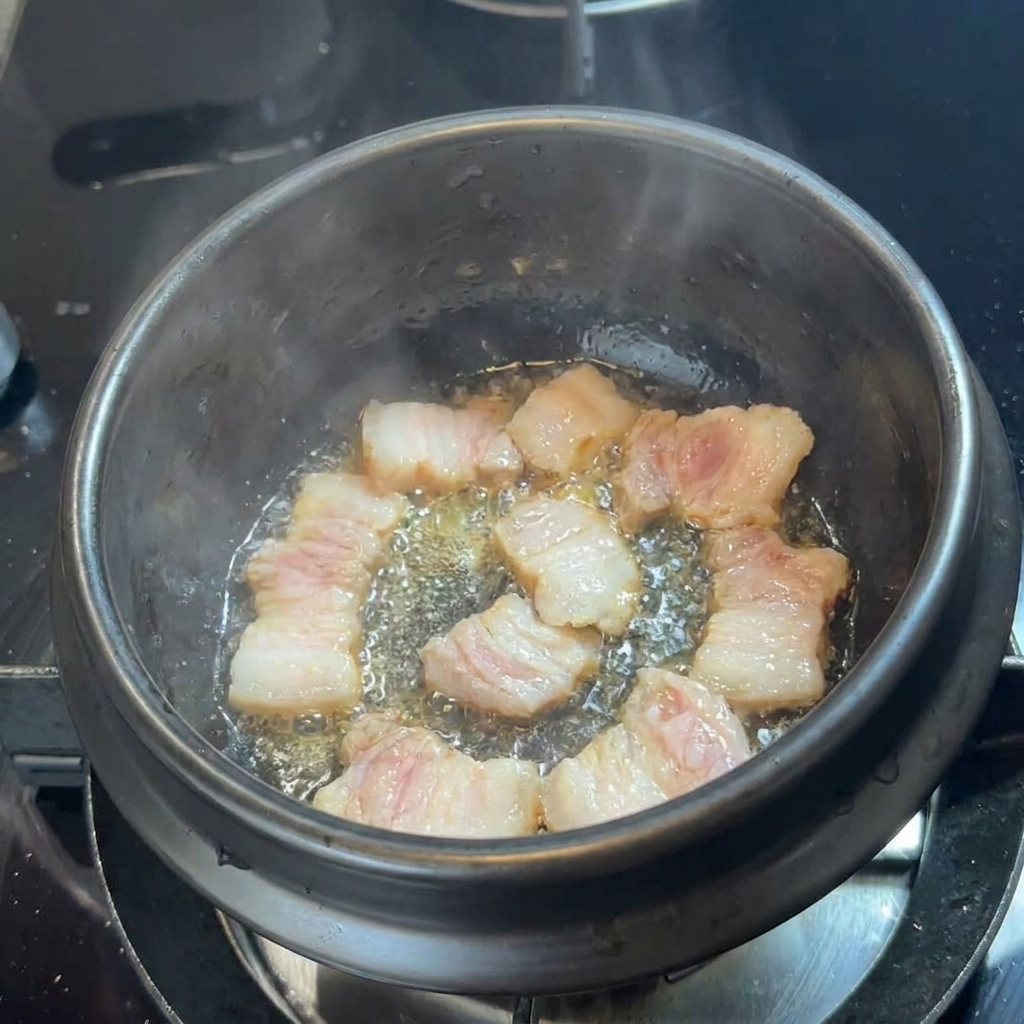
Place the pork belly pieces into a black stone pot over medium heat. Stir-fry the meat continuously until the fat begins to render out and the edges of the pork turn a light golden brown. This rendered fat will serve as the flavorful base for the entire soup.
Tip: If your pork belly is very lean, you can add a tiny splash of oil to help the rendering process get started without sticking. - 2Sauté the red onions
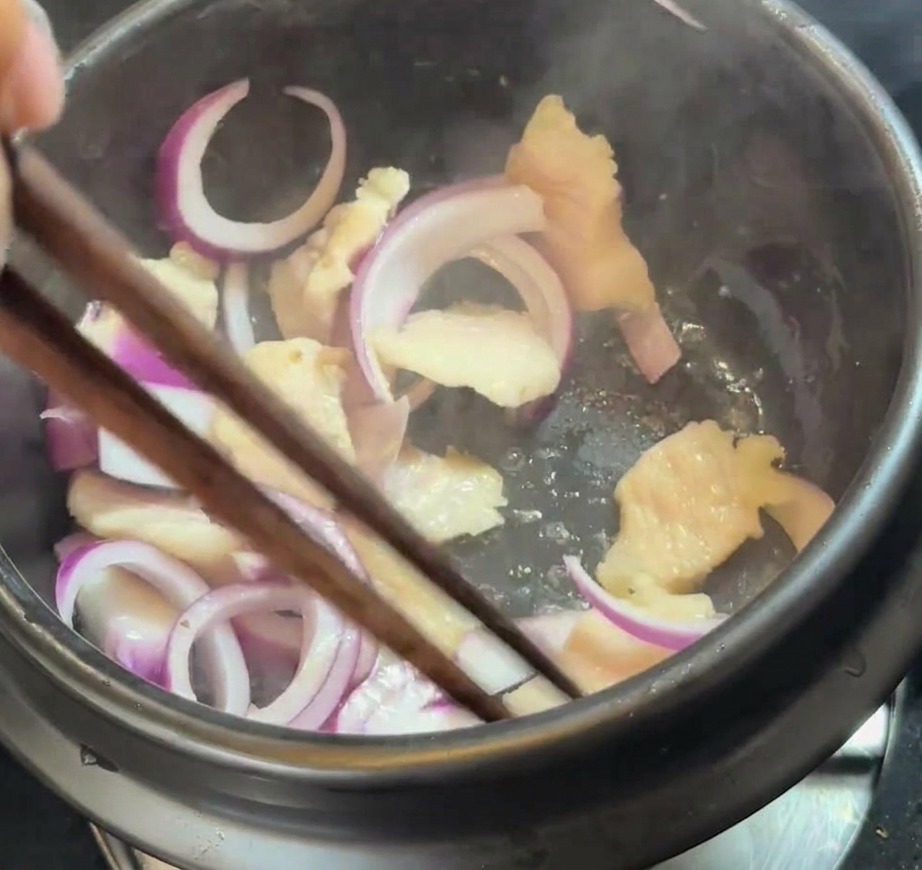
Once the pork has browned slightly, add the sliced red onions to the pot. Stir them into the pork and rendered fat, sautéing until the onions begin to soften and release their fragrance, which adds a natural sweetness to the broth.
Tip: Dont overcook the onions at this stage; they only need to be softened before the next ingredients are added. - 3Stir-fry the kimchi
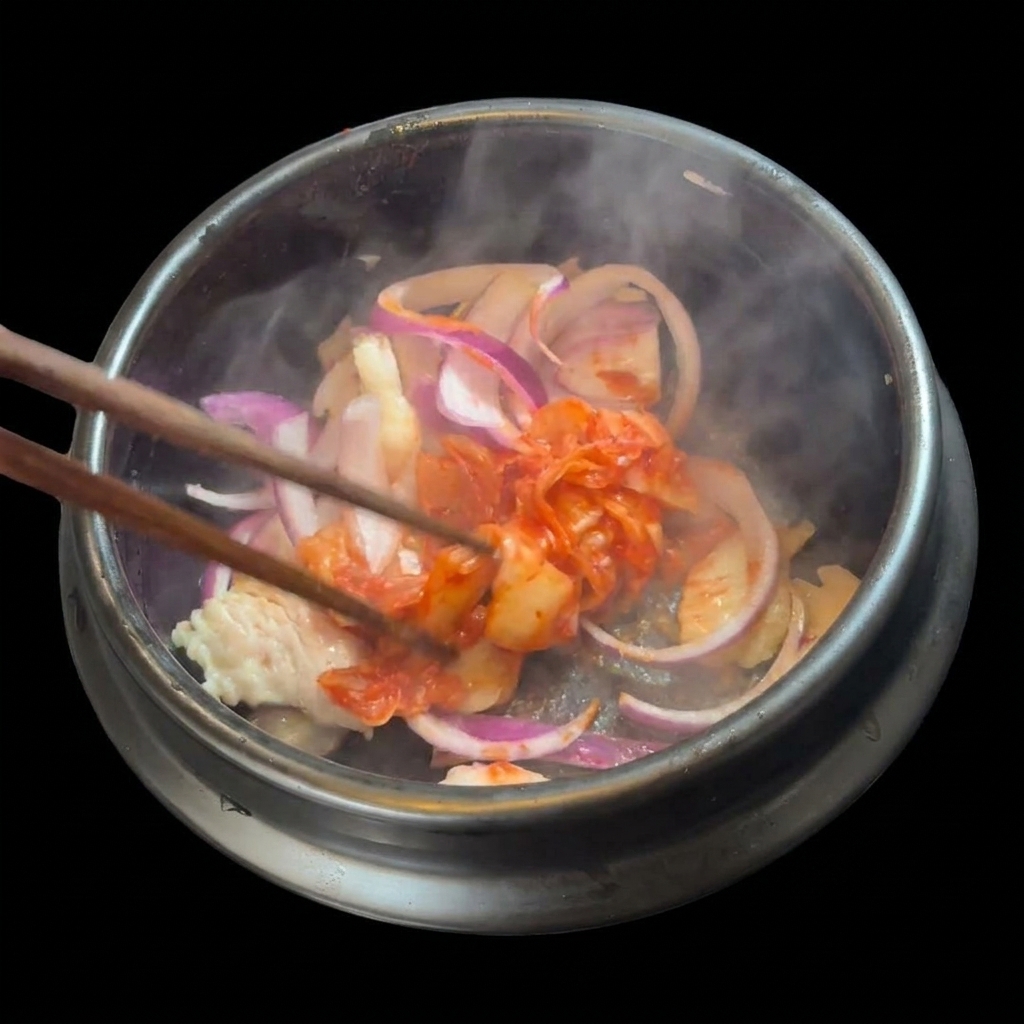
Add the chopped kimchi into the pot with the pork and onions. Continue to stir-fry the mixture for a few minutes. This step is crucial as it allows the kimchi to soften and develop a deeper, more complex flavor before the liquid is added.
Tip: Using older, fermented kimchi (sour kimchi) is best for this soup as it provides a much more robust flavor profile. - 4Pour in water
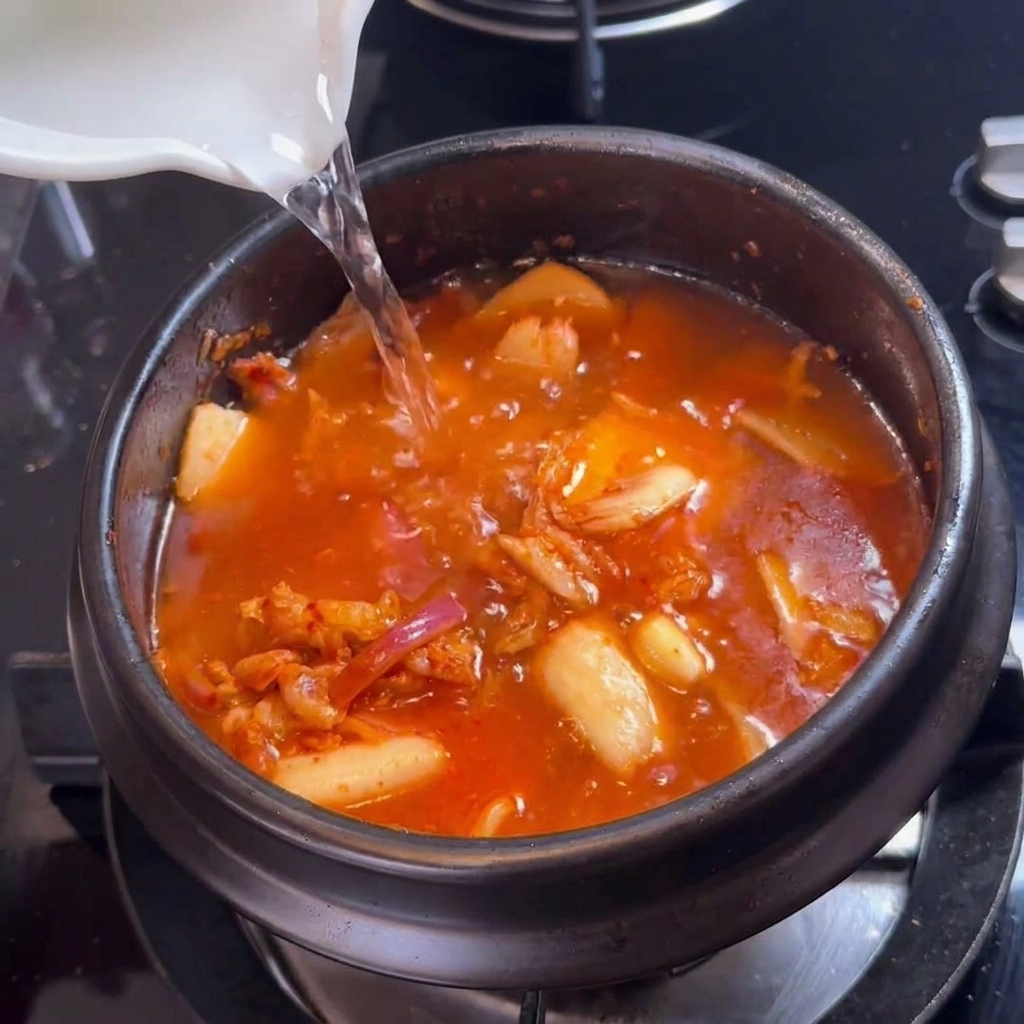
Pour water into the pot to submerge the stir-fried pork belly, onions, and kimchi. This creates the flavorful broth base for the soup.
Tip: Use warm or hot water to help the soup come to a boil faster and maintain the cooking temperature inside the pot. - 5Season with soy sauce
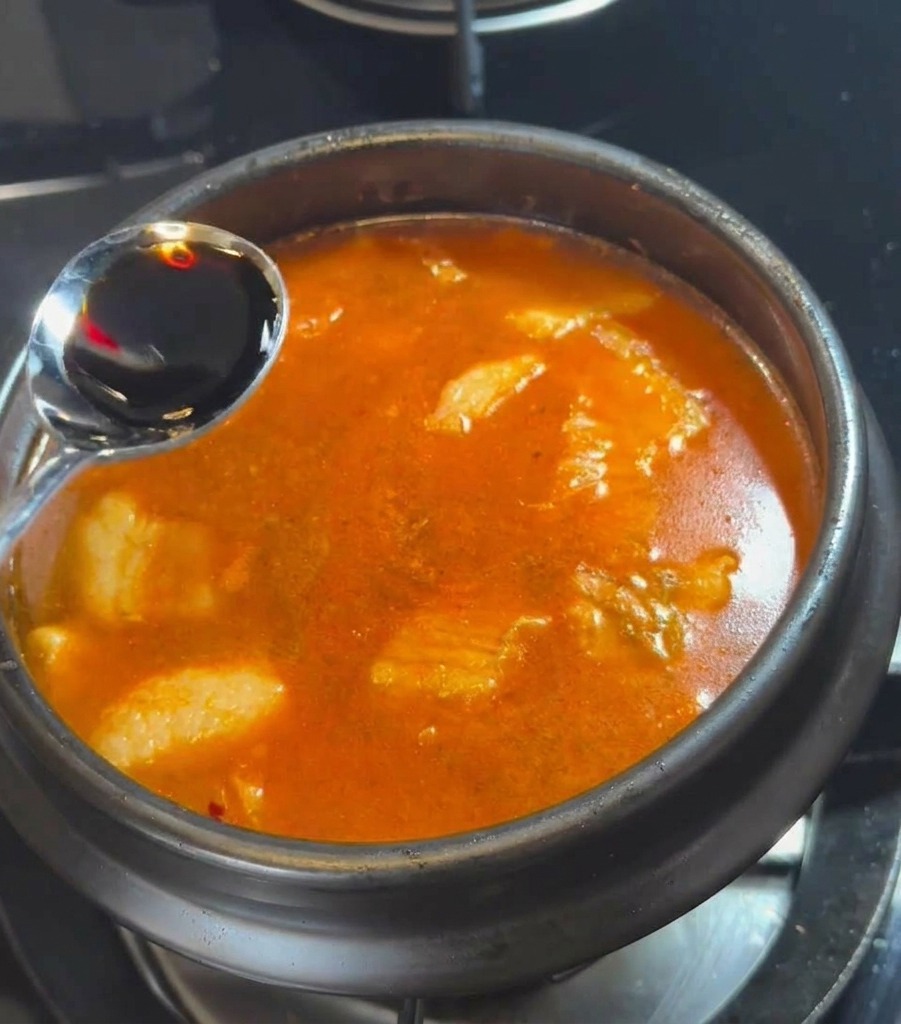
Add one spoonful of dark soy sauce to the simmering broth. This provides a savory depth (umami) and helps to darken the color of the soup for a more appetizing appearance.
Tip: Be careful not to add too much soy sauce early on; you can always adjust the saltiness at the very end of cooking. - 6Add the chili powder
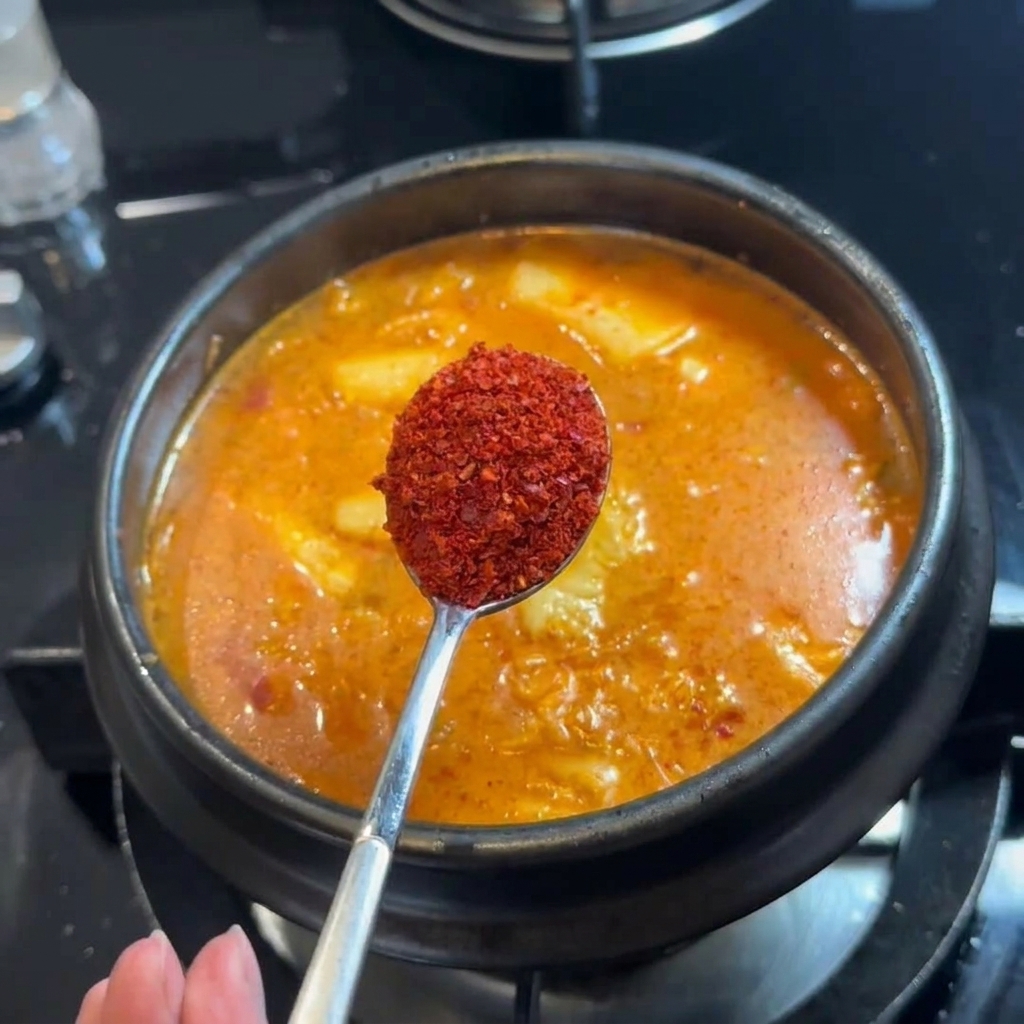
Add one spoonful of red chili powder (gochugaru) to the pot. Stir it in thoroughly to distribute the heat and deepen the signature red color of the kimchi soup.
Tip: If you prefer a milder soup, you can reduce the amount of chili powder or use a variety that is specifically labeled as mild. - 7Add sugar
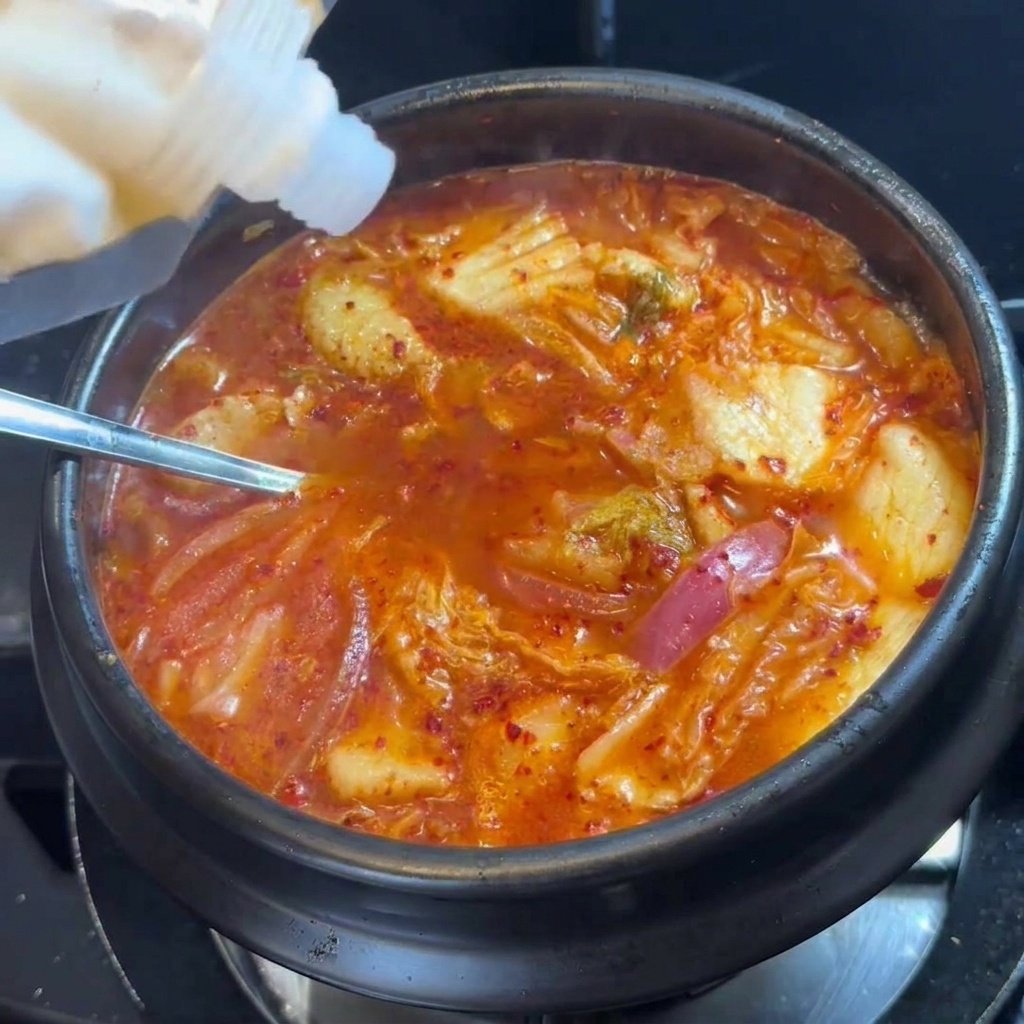
Sprinkle white sugar into the soup to balance the sharp sourness of the fermented kimchi. Stir well to ensure the sugar is fully dissolved into the bubbling broth.
Tip: Adjust the sugar amount based on the sourness of your kimchi; older, highly fermented kimchi will require slightly more sugar to balance the acidity. - 8Add the tofu cubes
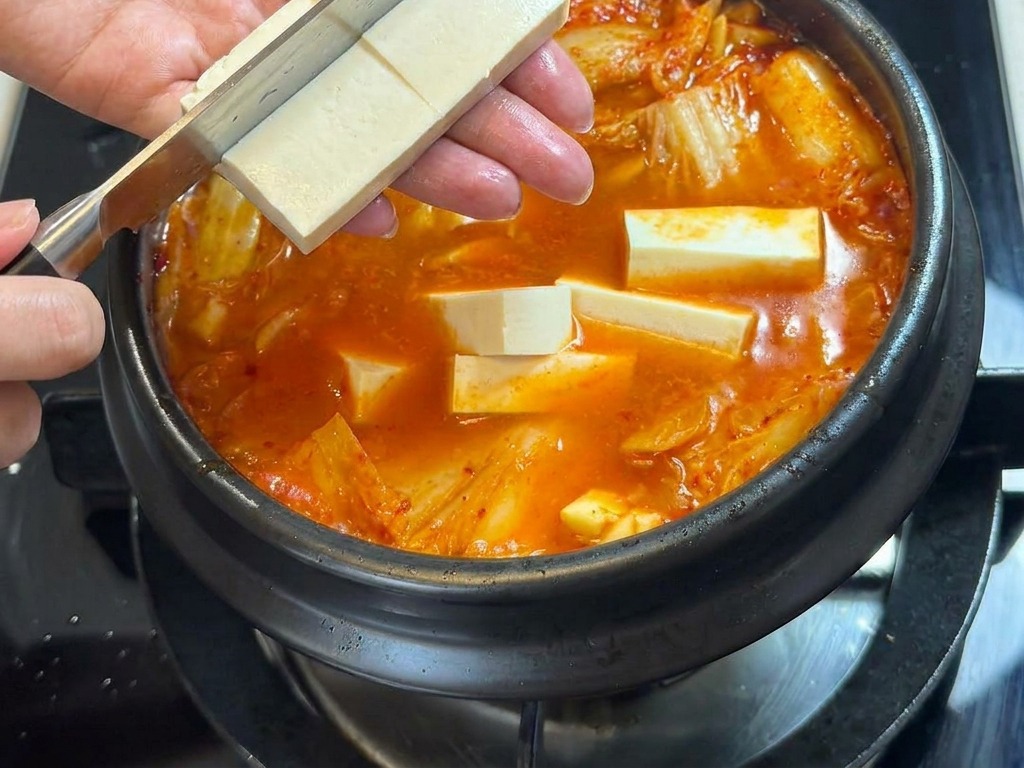
Carefully slice half a block of tofu into uniform cubes and place them gently into the boiling red soup. The tofu is a classic addition that absorbs the spicy broth perfectly while providing a soft, creamy texture that balances the heat.
Tip: Use firm or medium-firm tofu to ensure the cubes hold their shape well while the stew continues to simmer. - 9Stir in minced garlic
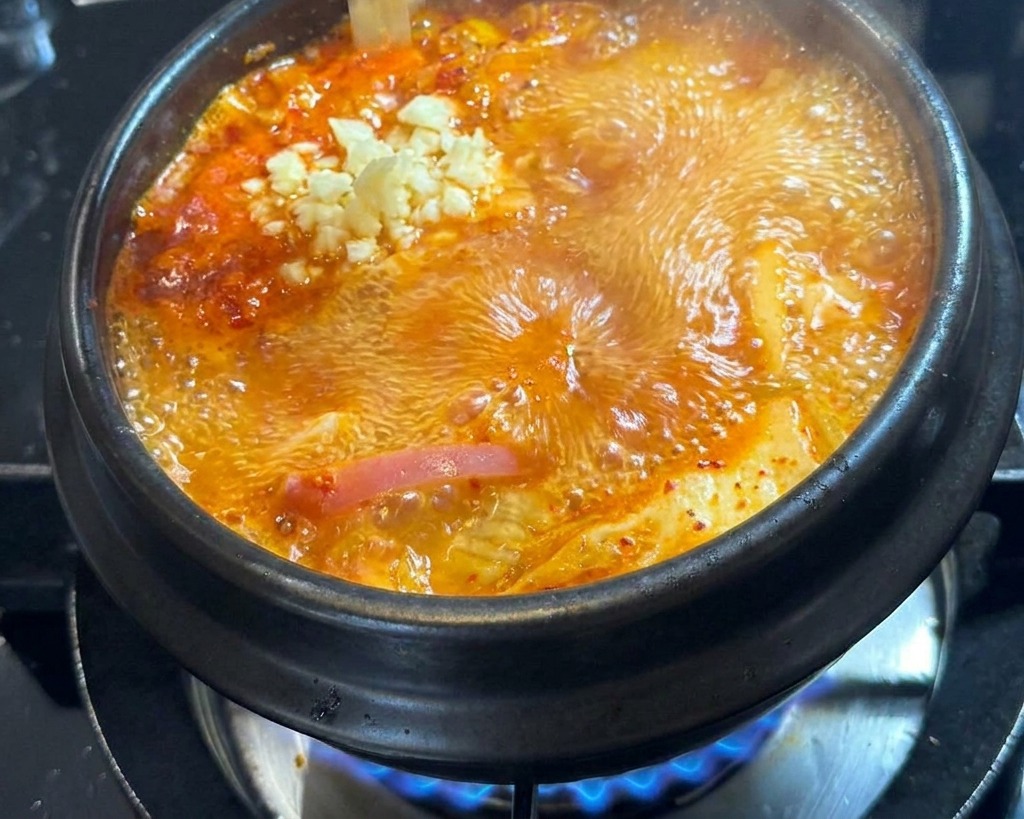
Add a generous handful of minced garlic to the center of the boiling pot. Garlic is a foundational aromatic in Korean cuisine that adds a deep, savory punch and rounds out the spicy and sour flavors of the kimchi broth.
Tip: Add the garlic toward the end of the cooking process to maintain its strong, fresh aroma. - 10Toss in green chilies
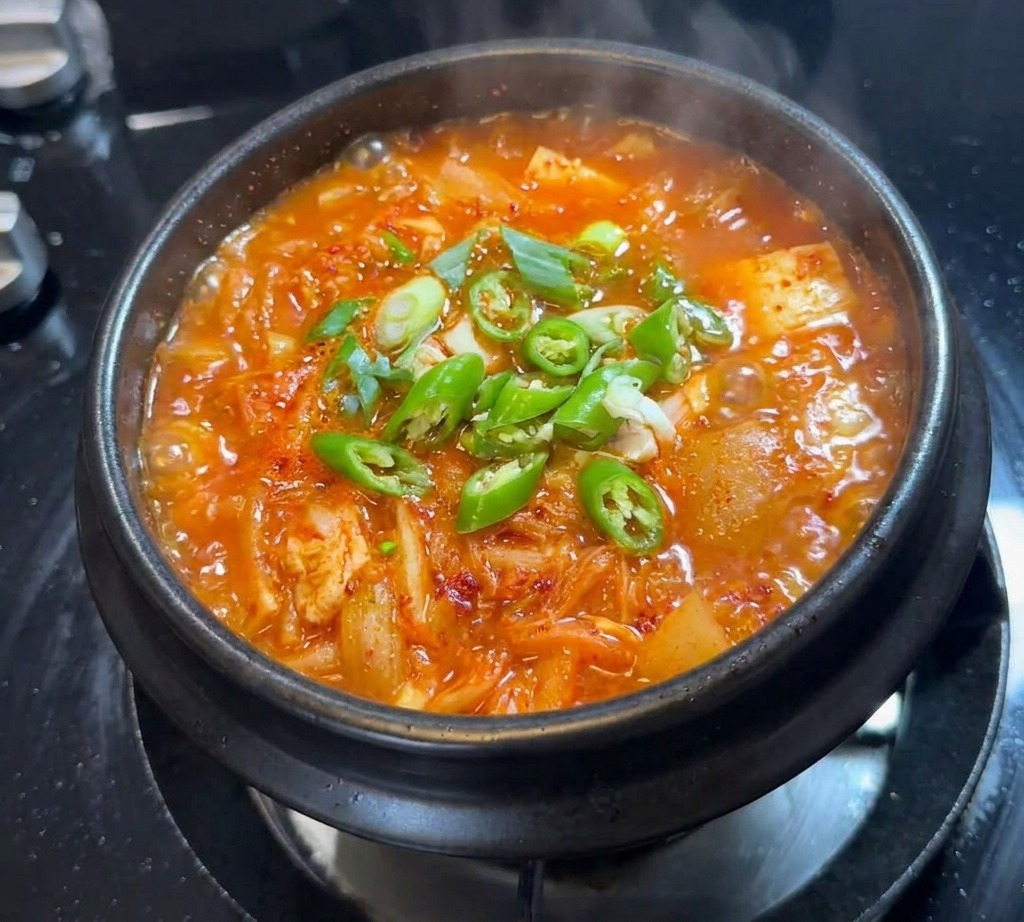
Add sliced green chili peppers to the pot for an extra layer of fresh heat and vibrant color. This addition provides a sharp spiciness that cuts through the richness of the pork belly and enhances the overall complexity of the dish.
Tip: If you prefer a milder soup, you can remove the seeds from the chilies or use a less spicy variety of pepper. - 11Finish with bean sprouts
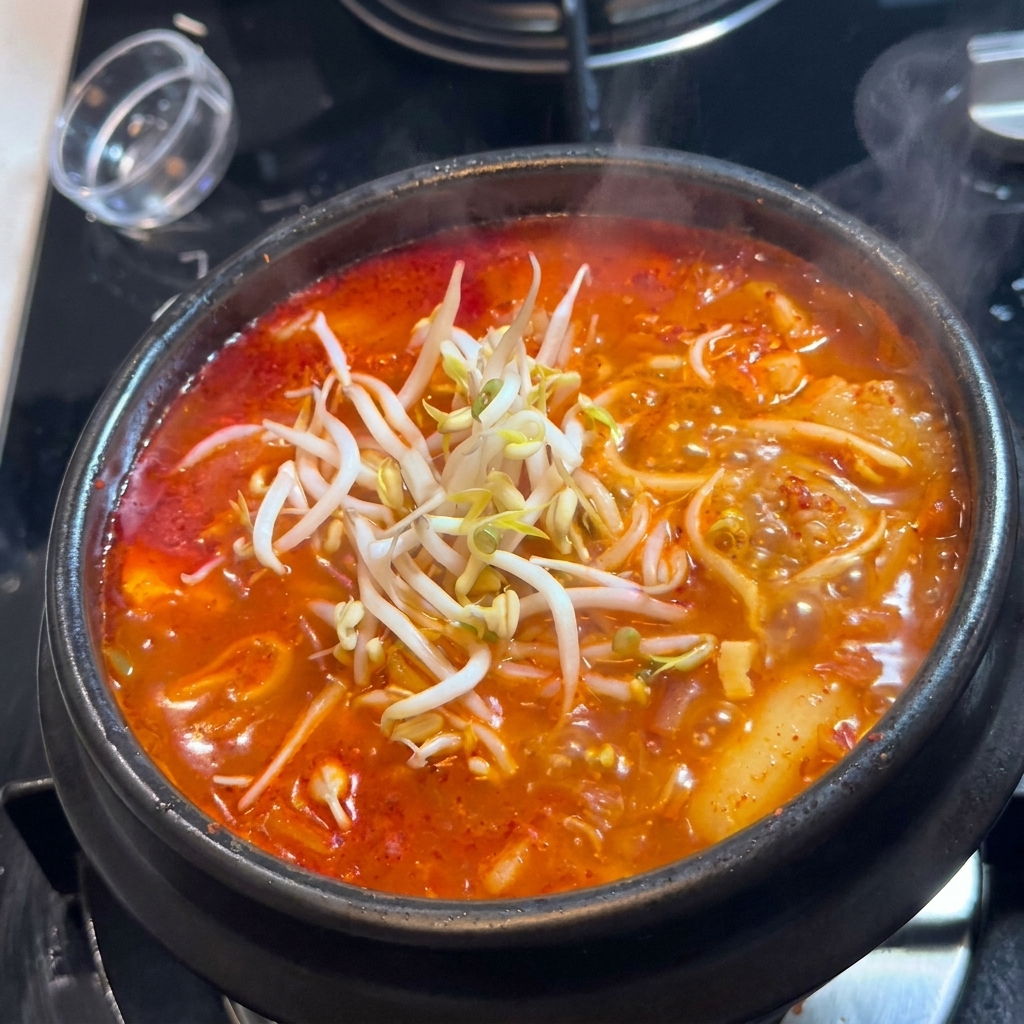
As the final step, place a handful of fresh bean sprouts on top of the boiling soup. Let the stew come back to a boil briefly; the sprouts will soften slightly while adding a refreshing, crunchy element to the finished meal.
Tip: Be careful not to overcook the bean sprouts; they only need a minute or two in the boiling liquid to reach the perfect crisp-tender consistency.